Why Summer Storms Pose a Unique Threat to Retaining Walls in Washington
Every summer, Washington residents face a weather pattern that most don't anticipate: sudden, intense cloudbursts followed by tropical storm systems that dump several inches of rain in just hours. Unlike gradual seasonal rainfall, these extreme weather events create sudden and severe stress on retaining walls across the region. Homeowners often discover damage only after the rain stops, sometimes finding their walls cracked, bowed, or on the verge of collapse.
The problem isn't just the volume of water. It's how fast that water accumulates behind and around a retaining wall structure. When soil becomes saturated during a cloudburst, it gains weight and pushes outward with tremendous force. This is where the concept of hydrostatic pressure retaining wall failure becomes critical to understand. Without proper drainage systems in place, even a well-built wall can fail under the strain of a single major storm event.
Understanding Hydrostatic Pressure and Wall Failure
Hydrostatic pressure is the force exerted by water against a structure. In the context of retaining walls, this pressure builds up when water becomes trapped in the soil behind the wall. During heavy rain events like those common in Washington summers, water infiltrates the soil and has nowhere to go. As the soil becomes heavier and wetter, it pushes harder against the back of the wall. If the wall isn't designed to handle this pressure, it will bow outward, crack, or eventually fail completely.
The danger escalates when a retaining wall lacks proper drainage infrastructure. A wall that was built decades ago or installed without modern drainage considerations becomes especially vulnerable. Homeowners might notice small cracks appearing after a storm, thinking the wall is still stable. In reality, those cracks represent the early stages of structural failure. The wall is being pushed by forces it was never engineered to resist. This is why prompt Retaining Wall Repair is essential the moment you notice signs of distress.
The Critical Role of Retaining Wall Drainage Systems
The most effective defense against hydrostatic pressure is a properly designed retaining wall drainage system. Drainage works by intercepting water before it accumulates behind the wall and directing it safely away. Without drainage, water simply pools behind the wall, creating pressure that increases with every inch of rainfall. With drainage, that water is managed and moved away from the structure, dramatically reducing the forces acting on the wall.
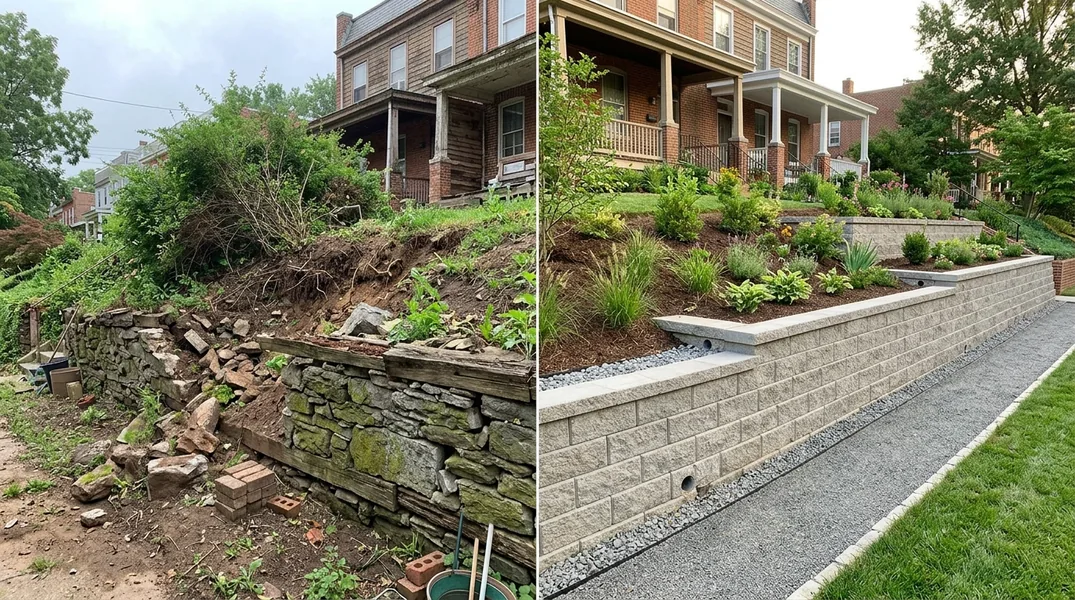
A quality drainage system includes multiple components working together. Perforated drain pipes are installed at the base of the wall to collect water that seeps down through the soil. Gravel backfill around these pipes allows water to flow freely toward the drain rather than remaining trapped in dense soil. Geotextile fabrics prevent soil from clogging the gravel and pipes. When these elements are properly installed, they create a pathway for water to escape, keeping the soil behind the wall as dry as possible even during intense summer storms.
French Drains: The Gold Standard for Retaining Wall Protection
Among drainage solutions, the retaining wall french drain stands out as one of the most reliable and proven methods for protecting walls from water damage. A french drain is essentially a trench filled with gravel and a perforated pipe that runs along the base or behind the wall. Water naturally flows through the gravel and into the pipe, which carries it away to a suitable discharge point. This system works passively, requiring no pumps or electricity, which makes it both cost-effective and dependable over the long term.
French drains are particularly valuable in Washington because they handle the region's intense summer rainfall patterns exceptionally well. During a cloudburst, while other walls are struggling with rising water pressure, a properly installed french drain is actively moving water away from the wall structure. The difference in performance can be dramatic. Homeowners who invest in french drain installation often find that their walls remain stable through storms that would have damaged unprotected structures. If your current wall lacks this protection, adding a french drain system is one of the smartest upgrades you can make.
Signs Your Retaining Wall Is Suffering from Water Damage
Recognizing the early warning signs of water-related retaining wall failure allows you to address problems before they become catastrophic. Look for horizontal cracks in the wall face, which indicate the wall is bowing under pressure. Vertical cracks are also concerning, especially if they're widening. Efflorescence, a white powdery substance on the wall surface, indicates water is seeping through the wall and leaving mineral deposits behind. If you notice water pooling at the base of the wall after rain, that's a clear sign that drainage is inadequate.
Another critical warning sign is soil erosion at the top of the wall or visible settling of the ground behind it. This suggests water is moving through the soil in ways it shouldn't be. Leaning or tilting of the wall is perhaps the most obvious sign of failure, indicating that hydrostatic pressure has already caused significant structural damage. If you observe any of these conditions after a summer storm, contact Washington Retaining Wall immediately at (771) 252-1406 for a professional assessment. The longer you wait, the more expensive the eventual repair becomes.
When You Need Professional Retaining Wall Installation or Replacement Near Me
If your existing retaining wall shows signs of water damage or lacks proper drainage, you face two main options: repair or replacement. Retaining Wall Repair can address specific problems like cracks or localized failure, especially if the wall's structural integrity is otherwise sound. However, if the wall is severely bowed, extensively cracked, or simply too old to justify repair costs, Retaining Wall Replacement may be the better long-term investment. A new wall can be built with modern drainage systems that will protect your property for decades to come.
When choosing between repair and replacement, consider the wall's age, the extent of damage, and your long-term plans for the property. Concrete Retaining Walls are a durable choice for replacement, offering excellent longevity when properly installed with comprehensive drainage. Whatever you decide, working with experienced local professionals who understand Washington's weather patterns and soil conditions is essential. Washington Retaining Wall has the expertise to evaluate your wall, recommend the best solution, and execute the work to the highest standards. Request a free estimate today to learn your options.
Protecting Your Investment: Maintenance and Prevention
Even a well-built retaining wall with excellent drainage requires some maintenance to remain effective. After major summer storms, inspect your drainage system to ensure water is flowing away properly and that gravel and pipes haven't been clogged by debris. Clear gutters and downspouts on your home so they don't direct roof runoff directly toward the wall. Consider grading the ground around your wall to slope away from it, encouraging water to flow away naturally rather than pooling against the wall base.
Vegetation management also plays a role in wall health. While some roots can help stabilize soil, large trees planted too close to a retaining wall can cause problems. Tree roots can damage drainage systems, and during storms, saturated soil around large trees becomes heavier and pushes harder against the wall. If you're planning new landscaping near a retaining wall, keep plantings at a safe distance and avoid species with aggressive root systems. These preventive measures, combined with a properly designed drainage system, will help your retaining wall withstand whatever summer weather Washington throws at it. Call Washington Retaining Wall at (771) 252-1406 to discuss your wall's specific needs and learn more about protecting your property.
Looking for a professional retaining wall contractor in Washington? Washington Retaining Wall responds fast for all your retaining wall needs.
Get a Free QuoteOur services: Retaining Wall Installation · Retaining Wall Repair · Retaining Wall Replacement