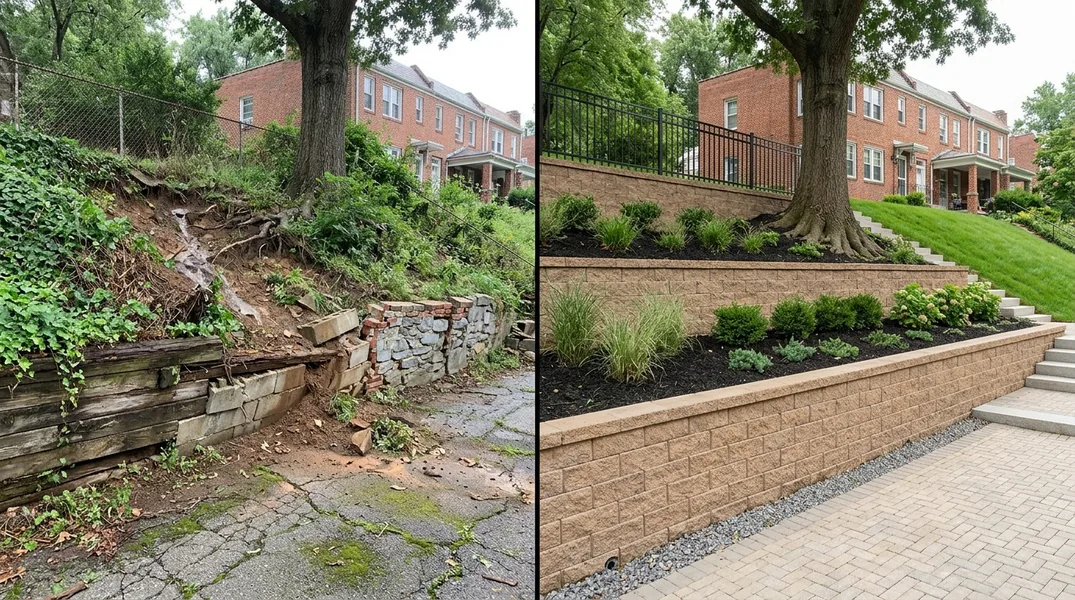
Winter Damage and Retaining Walls: What Happens When Temperatures Drop
Winter in Washington brings freeze-thaw cycles that can be brutal on landscape structures. When water seeps into soil behind your retaining wall and freezes, it expands with tremendous force, pushing against the wall from behind. This hydraulic pressure, combined with the weight of saturated soil, often causes the wall to lean, bow, or shift outward. By spring, many homeowners discover their once-sturdy walls have developed new problems they didn't notice before the cold months.
The damage isn't always dramatic or immediately visible. A retaining wall might lean just slightly, or you might notice new cracks appearing in the mortar or concrete. Some walls develop horizontal fractures, while others show signs of settlement where sections have dropped lower than their neighbors. The severity of winter damage depends on several factors: the wall's age, its construction quality, drainage conditions, soil composition, and how harsh the winter was. In Washington, where winters can fluctuate between freezing and thawing multiple times per season, these stresses accumulate quickly.
Signs Your Retaining Wall Needs Attention: How to Assess the Damage
Before you decide whether Retaining Wall Repair or replacement is necessary, you need to understand what you're dealing with. Start by walking around your wall and looking for visible signs of distress. A noticeable lean or bow outward is the most obvious red flag. Stand back and look at the wall's profile against a straight line. If the top of the wall is clearly pushed away from the soil it's supposed to retain, the structural integrity is compromised. You might also notice gaps opening up between sections, especially if you have a segmental block wall.
Cracks are another critical indicator. Small hairline cracks in Concrete Retaining Walls might be cosmetic, but larger cracks that run horizontally or diagonally suggest deeper problems. Pay attention to whether cracks are getting wider or if you see fresh concrete dust or debris at the base of the wall. Water staining, efflorescence (white mineral deposits), or wet spots indicate drainage problems that may have contributed to the damage. If you notice soil eroding from behind the wall or small stones pushing through cracks, the wall's ability to contain soil is failing.
Repair Versus Replacement: Making the Right Decision for Your Property
The choice between repair and replacement depends on the extent of damage, the wall's age, and your long-term goals. If your wall is relatively young, structurally sound in most areas, and the damage is localized to specific sections or issues like Retaining Wall Repair of cracks, repair is often the practical choice. A professional contractor can stabilize the wall, improve drainage, and restore functionality without the expense and disruption of removal and reconstruction. Repairs might include installing internal bracing, adding drainage systems, injecting concrete into cracks, or rebuilding specific damaged sections.
However, if your wall is significantly leaning, showing widespread structural failure, or is older than 20 to 30 years, Retaining Wall Replacement may be the smarter investment. A severely compromised wall poses safety risks to your property and anyone nearby. It will continue to deteriorate, and repeated repairs can eventually cost more than starting fresh. A new wall built with modern materials, proper drainage, and correct engineering will provide decades of reliable service. Additionally, if you're planning landscape improvements or want to change the wall's appearance, replacement gives you that opportunity.
When Repair Makes Sense: Common Solutions for Leaning and Cracked Walls
Many homeowners are surprised to learn that their leaning retaining wall can be saved through targeted repair work. If the wall has shifted less than two inches and the damage is primarily cosmetic or limited to cracks, repair is usually viable. One of the most effective solutions is improving drainage behind the wall. Poor drainage is often the root cause of winter damage because water buildup increases soil pressure. Installing or upgrading a drainage system, including perforated pipe and gravel, can dramatically reduce the forces pushing against the wall and prevent future damage.
For cracked concrete or masonry, epoxy injection or polyurethane foam injection can seal cracks and restore structural integrity. These methods are less invasive than removing and rebuilding the wall. If the wall is leaning but not severely damaged, internal bracing or tieback anchors can be installed to stabilize it. These systems work by anchoring the wall to stable soil or rock deeper in the ground, counteracting the outward pressure. In some cases, a contractor might rebuild just the damaged section while leaving the rest of the wall in place. The key is having a professional assess the wall thoroughly to determine which repair methods will work for your specific situation.
When Replacement Is the Better Choice: Signs It's Time to Start Over
If your retaining wall is leaning more than a few inches, has major structural cracks running through multiple sections, or is actively moving, replacement is likely necessary. A wall that's failing will continue to fail, and attempting multiple repairs on a fundamentally compromised structure wastes money and leaves you with a safety liability. Additionally, if the wall is very old and was built without proper drainage or engineering standards, it may not be worth trying to salvage. Modern retaining walls are designed with better materials, improved drainage systems, and proper engineering calculations that older walls often lack.
Retaining Wall Replacement is also the right choice if you want to upgrade your landscape or change the wall's design. Whether you prefer segmental blocks, poured concrete, or natural stone, a new wall can be tailored to your aesthetic preferences while meeting all current engineering and drainage standards. The investment in replacement is significant, but you're getting a structure designed to last 50 years or more. When you factor in the cost of repeated repairs, the total cost of replacement often becomes competitive, and you gain peace of mind knowing your wall is built to last.
Retaining Wall Repair and Replacement Cost in Washington: What to Budget
Understanding pricing is essential when deciding between repair and replacement. Repair costs typically range from $500 to $5,000 depending on the scope of work. Simple drainage improvements or crack repairs fall on the lower end, while more complex solutions like internal bracing or section rebuilding cost more. Replacement, on the other hand, generally costs between $3,000 and $15,000 or more for a typical residential wall, depending on the wall's length, height, materials chosen, and site conditions. A 30-foot wall in Georgetown (Washington) might cost significantly more than a similar wall in a different neighborhood due to access, soil conditions, and local labor rates.
The best way to understand your options and costs is to get a professional assessment. Washington Retaining Wall offers a free estimate for both repair and replacement projects. A contractor will evaluate your wall, discuss the pros and cons of each approach, and provide transparent pricing so you can make an informed decision. Don't let a leaning wall become a bigger problem. Call Washington Retaining Wall at (771) 252-1406 to schedule your inspection today.
Looking for a professional retaining wall contractor in Washington? Washington Retaining Wall responds fast for all your retaining wall needs.
Get a Free QuoteOur services: Retaining Wall Installation · Retaining Wall Repair · Retaining Wall Replacement