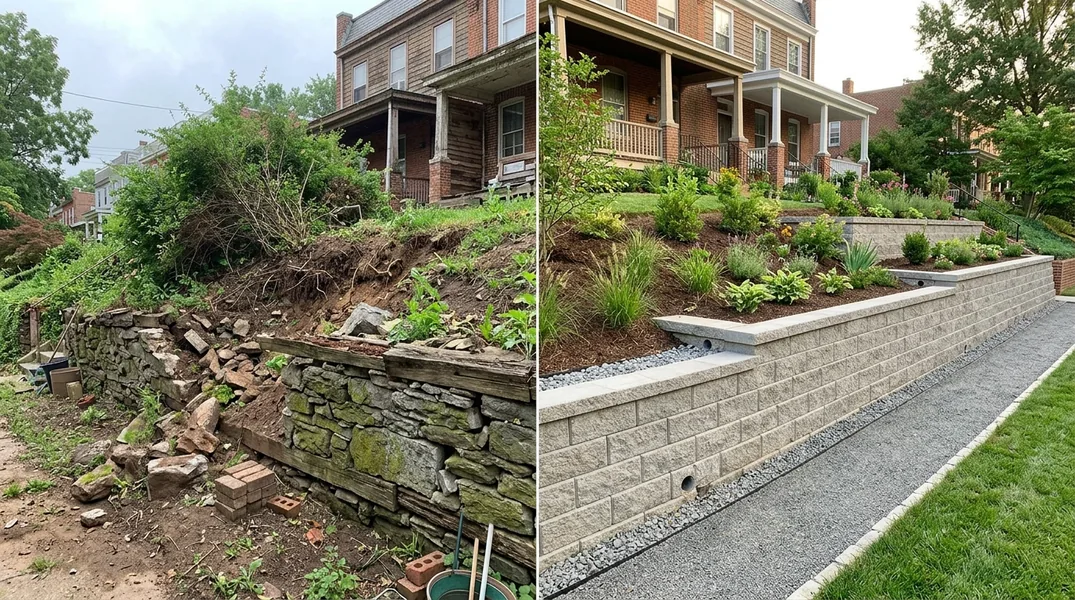
Why Retaining Walls Fail in Washington's Unique Climate and Terrain
Washington homeowners face a particular challenge when it comes to retaining wall longevity. The region's combination of clay-heavy soil, significant seasonal moisture, and freeze-thaw cycles creates an environment where retaining walls are under constant stress. Unlike drier climates where walls might stand for decades with minimal maintenance, Washington properties experience conditions that accelerate deterioration if proper drainage and construction methods aren't in place from day one.
The problem starts beneath the surface. When a retaining wall is built without adequate drainage or backfill preparation, water accumulates behind the wall and pushes outward with tremendous force. Winter makes this worse. When temperatures drop below freezing, that trapped water freezes and expands, exerting additional pressure on the wall structure. Come spring, the thaw-cycle repeats, and the wall has moved slightly. Year after year, these small movements compound, leading to the visible signs of failure that homeowners eventually notice. Many Washington rowhouse owners and hillside property residents don't realize their walls are in trouble until the damage is already significant.
Common Warning Signs: Leaning, Bowing, and Cracking Walls
A leaning retaining wall is often the first visual clue that something is wrong. If you notice your wall tilting away from the soil it's meant to hold back, that's a sign that soil pressure and moisture have exceeded the wall's structural capacity. This doesn't happen overnight. The wall gradually moves outward as hydrostatic pressure builds behind it. What starts as a slight tilt can eventually become a dramatic lean that threatens nearby structures, pathways, or landscaping.
Bowing is another critical indicator of failure. A bowing retaining wall appears to bulge outward in the middle section, creating a curved profile rather than a straight one. This deformation happens when the wall material itself begins to yield under extreme lateral pressure. Unlike a simple lean, a bowing wall has already experienced significant structural compromise. If you see this condition, Retaining Wall Repair or Retaining Wall Replacement should be considered urgent.
Cracks are equally important warning signs. Horizontal cracks near the base of the wall often indicate pressure from water and soil. Vertical or diagonal cracks suggest the wall is settling unevenly or being pushed laterally. Large cracks that continue to grow, or cracks that weep water, mean the wall's integrity is compromised and professional evaluation is necessary immediately.
Poor Drainage: The Silent Killer of Retaining Walls
If there's one factor responsible for the majority of retaining wall failures in residential settings, it's inadequate drainage. A retaining wall without proper drainage is like a dam with a slow leak. Water accumulates behind the wall, creating hydrostatic pressure that pushes outward relentlessly. This pressure is invisible until the wall finally gives way, but it's been working against your structure from day one.
Proper drainage requires multiple components working together. Perforated drainage pipe installed behind the wall directs groundwater away from the structure. Gravel backfill allows water to flow freely rather than pooling. A drainage layer or geotextile fabric prevents fine soil particles from clogging the drainage system. Without these elements, even a well-built wall will eventually fail. Many older retaining walls in Capitol Hill (Washington) and other established neighborhoods were constructed before modern drainage standards became common, making them particularly vulnerable to failure as soil conditions shift and moisture patterns change over time.
If you're experiencing a failing retaining wall and suspect drainage issues, the solution often involves installing or upgrading the drainage system. This is a key component of professional Retaining Wall Repair work. Without addressing the drainage root cause, even a newly repaired wall will eventually face the same problems.
Soil Type and Hillside Pressure: Challenges for Washington Properties
Washington's soil composition presents unique challenges for retaining wall construction and longevity. Much of the region sits on clay-based soil that expands when wet and contracts when dry. This constant volume change creates stress on retaining walls that homeowners in other regions might never encounter. Additionally, clay soil doesn't drain well, which circles back to the drainage problem discussed earlier. Water sits in clay longer, increasing the duration and intensity of hydrostatic pressure against your wall.
For properties on hillsides or with significant elevation changes, soil pressure is even more pronounced. The weight of soil and any structures or landscaping on top of it creates constant lateral force on the retaining wall. A wall that's properly engineered and installed can handle this pressure indefinitely. But a wall built without adequate reinforcement, or one that's been damaged by freeze-thaw cycles or drainage failure, will eventually show signs of distress. Properties in Anacostia (Washington) and other areas with significant topography should be especially vigilant about wall inspection and maintenance.
When to Repair Versus Replace: Making the Right Decision
Not every failing retaining wall requires complete Retaining Wall Replacement. The decision depends on the extent of damage, the wall's age, and the underlying cause of failure. A wall with minor cracks, slight lean, or drainage issues might be successfully addressed through targeted repair work. Retaining Wall Repair can include installing new drainage systems, adding reinforcement, stabilizing the base, or patching and sealing cracks.
However, if the wall has severe bowing, major structural cracks, or has already shifted significantly, replacement may be the more cost-effective and safe solution long term. A severely compromised wall that's repaired might fail again within a few years if the underlying structural issues weren't fully addressed. Professional assessment is essential. The experts at Washington Retaining Wall can evaluate your wall's condition and recommend the best path forward, whether that's repair or replacement. Contact us at (771) 252-1406 for a thorough inspection.
Retaining Wall Repair Near Me: Getting Professional Help in Washington
If you're noticing signs of wall failure, waiting typically makes the problem worse. Water continues to accumulate, freeze-thaw cycles continue their work, and the wall continues to move. What might be a manageable repair today could become a costly replacement tomorrow. Professional Retaining Wall Repair services in Washington can address issues before they reach critical failure points.
Washington Retaining Wall specializes in diagnosing and fixing failing walls throughout the region. Whether your wall is leaning, bowing, cracking, or simply not draining properly, our team has the expertise to develop a solution tailored to your property's specific conditions. We understand Washington's climate, soil types, and the particular challenges facing rowhouse yards and hillside lots. When you're ready to address your retaining wall concerns, reach out for a free estimate or call us directly at (771) 252-1406. We'll assess your wall, explain what's causing the problems, and outline your repair or replacement options clearly so you can make an informed decision about your property.
Looking for a professional retaining wall contractor in Washington? Washington Retaining Wall responds fast for all your retaining wall needs.
Get a Free QuoteOur services: Retaining Wall Installation · Retaining Wall Repair · Retaining Wall Replacement